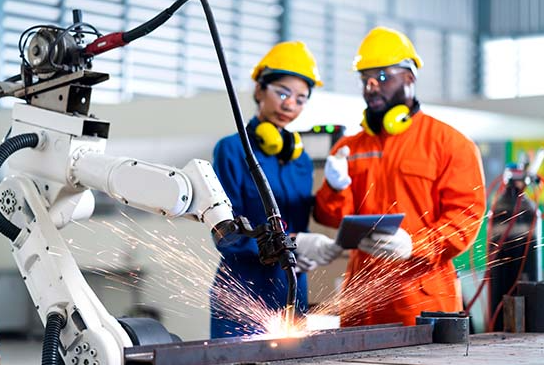
Automation in the workplace is increasingly reshaping business dynamics. Advanced technologies like machine learning and robotic process automation enhance operational efficiency by streamlining repetitive tasks. This shift allows employees to concentrate on more complex functions. However, the rise of automation also brings significant challenges, including potential job displacement and ethical concerns. Understanding the implications of these changes is crucial for organizations aiming to balance efficiency with human involvement. What strategies can businesses adopt to navigate this evolving landscape?
The Rise of Automation Technologies
As industries increasingly embrace technological advancements, the rise of automation technologies has transformed the landscape of the workplace.
Machine learning algorithms now optimize workflows, enhancing efficiency. Concurrently, robotic process automation streamlines repetitive tasks, enabling employees to focus on higher-level functions.
This paradigm shift not only reduces operational costs but also fosters a culture of innovation, empowering workers to harness their creative potential.
Benefits of Implementing Automation
Implementing automation offers significant advantages across various sectors, particularly in enhancing operational efficiency and accuracy.
Organizations experience substantial cost savings through reduced labor expenses and minimized errors. Additionally, automation facilitates productivity enhancement by streamlining workflows, allowing employees to focus on higher-value tasks.
This technological integration not only fosters innovation but also empowers companies to adapt swiftly to market demands, ensuring sustainable growth.
Challenges and Concerns of Automation
While automation presents numerous advantages, it also introduces a range of challenges and concerns that organizations must navigate.
Foremost among these are job displacement and the ethical implications associated with replacing human labor. As machines increasingly perform tasks traditionally handled by employees, stakeholders must address the potential socio-economic ramifications, ensuring responsible implementation that balances efficiency with the preservation of human dignity and employment opportunities.
See also: AI in Finance: Risk and Rewards
The Future of Work in an Automated World
Envisioning the future of work in an automated world requires a comprehensive understanding of how technology reshapes job landscapes and organizational structures.
The rise of remote collaboration tools necessitates significant workforce adaptation, fostering flexibility and efficiency.
Organizations must cultivate a culture that embraces technological advancements while ensuring employees are equipped with skills to thrive in an environment increasingly dominated by automation and digital connectivity.
Conclusion
In an era where automation reigns supreme, the workplace transforms into a seamless symphony of machines executing tasks with precision beyond human capability. Yet, this relentless march towards mechanization threatens to render human labor obsolete, as if humanity itself is but a fleeting whisper in a cacophony of robotic efficiency. As organizations traverse this paradox, they must reckon with the delicate balance of innovation and human essence, ensuring that the future of work does not become a dystopian landscape devoid of purpose.