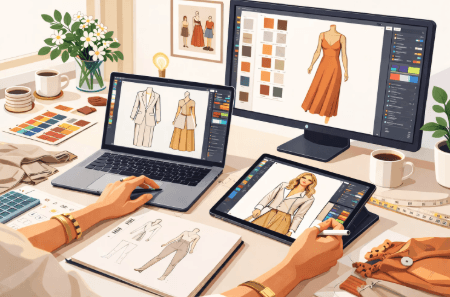
In the high-stakes world of fashion, the way a concept is presented is often as important as the design itself. While high-fidelity 3D renders are essential for technical validation, they can sometimes feel too “clinical” for creative mood boards or early-stage client pitches. Designers often crave the artistic soul of a hand-drawn illustration but lack the time to manually sketch every look. This is where Style-to-Sketch technology transforms the workflow, allowing designers to convert complex 3D designs back into stylized, artistic illustrations with a single click.
The Presentation Gap: Realism vs. Artistry
Modern fashion presentations usually fall into two categories: technical 3D models and creative sketches.
- The 3D Model: Excellent for showing fit, drape, and texture, but can lack the “emotional” spark required for high-level brand storytelling.
- The Stylized Illustration: Captures the mood, movement, and artistic flair of a collection, but is incredibly time-consuming to produce manually for every variation.
By streamlining the transition from 3D to sketch, designers no longer have to choose between speed and soul. They can engineer the garment in 3D and then “stylize” it for a professional presentation in seconds.
How Style-to-Sketch Enhances Your Workflow
The ability to generate stylized illustrations from 3D data provides a versatile toolkit for the modern fashion house:
1. Curating Cohesive Mood Boards
When presenting a collection to a creative director, consistency is key. Style-to-Sketch allows you to apply a uniform “artistic filter” across your entire 3D collection. Whether you want a minimalist line-drawing look or a more fluid watercolor aesthetic, the AI ensures every piece in your presentation looks like it was drawn by the same hand.
2. Rapid Content Generation for Social Media
Fashion marketing in 2026 thrives on “behind-the-scenes” aesthetics. Stylized illustrations are highly shareable and provide a sophisticated look for Instagram or digital lookbooks. By converting your 3D assets into sketches, you can generate high-quality marketing collateral long before the physical garments are manufactured.
3. Client and Buyer Engagement
Buyers often appreciate seeing the “vision” behind the technicality. Presenting a 360-degree 3D model alongside a beautifully stylized sketch provides a complete narrative. It shows that the brand understands both the craftsmanship of production and the artistry of design.
Technical Precision Meets Artistic Flair
What makes this workflow unique is that the stylized illustration is not just a random drawing; it is a “Digital Twin” of the technical 3D asset.
- Proportional Accuracy: Because the sketch is derived from a 3D model, the proportions, seam lines, and drapes are 100% accurate. You are presenting an artistic vision that is fundamentally buildable.
- Dynamic Posing: You can pose your 3D model in a dramatic catwalk stance and then convert that specific moment into a sketch. This allows for dynamic illustrations that would take a human artist hours to draft from scratch.
- Instant Re-Styling: If the creative direction changes from “edgy and dark” to “soft and romantic,” you don’t need to redraw. You simply adjust the Style-to-Sketch parameters and re-render the illustration.
Slashing Design Time and Costs
The traditional route of hiring a dedicated fashion illustrator for every collection is becoming a thing of the past. By automating the illustration phase:
- Small Teams Can Scale: Independent designers can produce professional-grade lookbooks that rival major luxury houses.
- Zero Rework: If a design is updated in the 3D studio, the corresponding illustration can be updated instantly, ensuring the presentation always reflects the latest version of the garment.
- Sustainable Marketing: Producing digital illustrations instead of organizing physical photoshoots for early-stage feedback saves massive amounts of travel, logistics, and material costs.
See also: How to Get Help with Anxiety: Practical Steps That Work
The Future: The “Hybrid” Designer
As we move forward, the most successful designers will be those who can navigate the “Hybrid” space—the intersection of technical 3D engineering and creative digital artistry. Utilizing Style-to-Sketch technology is the final piece of this puzzle. It allows the modern designer to speak two languages at once: the language of the factory and the language of the gallery.
Conclusion
Streamlining your fashion presentation workflow is about more than just efficiency; it is about reclaiming the joy of storytelling. By bridging the gap between 3D design and stylized illustration, Style-to-Sketch technology allows you to present your work with the precision of a scientist and the heart of an artist.
In an industry that moves as fast as fashion, the ability to turn technical data into beautiful, stylized imagery is the ultimate competitive edge. Your 3D models have provided the foundation; now, let technology give them the artistic finish they deserve.